Have you noticed how often we rely on the phrase "very busy"? It’s the default answer to "How are you?" or "How’s work?" but it feels flat and unmemorable. While accurate, it lacks punch. If you want to sound more like a native speaker and less like a textbook, expanding your vocabulary with the right very busy synonym slang is the best place to start. It adds flavor, emotion, and context to your daily conversations.
Why "Very" Holds You Back
When we describe a packed schedule, we tend to lean on the crutch word "very." It is a weak modifier that does little to actually paint a picture of your day. Saying you are "very busy" tells people you have a lot to do, but it doesn't convey the stress, the speed, or the chaotic reality of the situation. To fix this, you need stronger, more evocative words that do the heavy lifting without needing a modifier.
Visualizing Your Vocabulary Upgrade
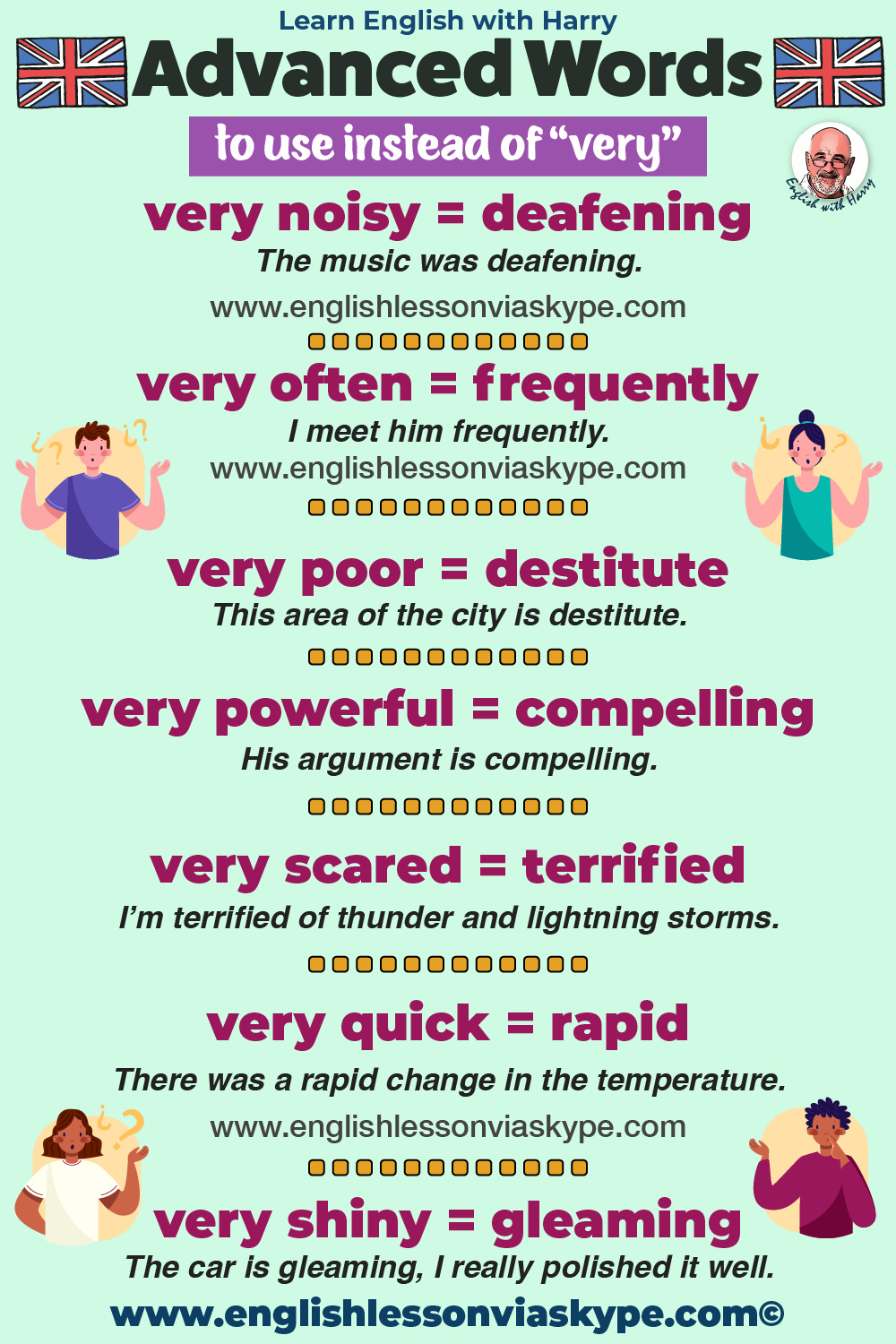
Breaking the habit of overusing "very" takes practice, but remembering to upgrade your instincts is half the battle. You want to move from basic descriptions to expressions that carry more weight. While the image above offers general replacements for "very," applying this logic to your schedule allows you to choose terms that fit the specific vibe of your chaos—whether it’s frantic, productive, or overwhelming.
Slang That Fits the Scene
Choosing the right term depends on the specific scenario. Not all busyness is the same; sometimes you are working hard, and other times you are just disorganized. Here are a few reliable options that are commonly understood in American English:
- Swamped: This is excellent for professional but relaxed contexts. It implies you are drowning in work and might not be able to take on new tasks yet.
- Slammed: Similar to swamped, but this often implies a sudden, heavy volume of tasks or customers. It’s very common in retail or service industries.
- On the grind: This focuses on the effort you’re putting in. It suggests long hours and hustle, often used when you are proud of the hard work.
- In the weeds: A great option if you are so far behind it feels difficult to see a way out. This originated in restaurants but works anywhere that feels chaotic.
How to Choose the Right Phrase
Knowing the word is only half the battle; knowing when to use it is the key to sounding natural. You generally wouldn’t tell a strict corporate manager that you are "totally buried" during a formal presentation. Instead, save the colorful slang for casual chats with colleagues or friends. Always read the room. If you are unsure, start with lighter phrases like "hectic" before moving to heavier slang like "slammed."
Practice Makes Progress
Don't try to memorize ten new words at once. Pick one or two that feel comfortable and consciously rotate them into your conversations this week. The goal isn't to sound theatrical; it is to replace a boring habit with a clearer, more colorful way to describe your reality.
Have you noticed how often we rely on the phrase "very busy"? It’s the default answer to "How are you?" or "How’s work?" but it feels flat and unmemorable. While accurate, it lacks punch. If you want to sound more like a native speaker and less like a textbook, expanding your vocabulary with the right very busy synonym slang is the best place to start. It adds flavor, emotion, and context to your daily conversations.
Why "Very" Holds You Back
When we describe a packed schedule, we tend to lean on the crutch word "very." It is a weak modifier that does little to actually paint a picture of your day. Saying you are "very busy" tells people you have a lot to do, but it doesn't convey the stress, the speed, or the chaotic reality of the situation. To fix this, you need stronger, more evocative words that do the heavy lifting without needing a modifier.
Visualizing Your Vocabulary Upgrade
Breaking the habit of overusing "very" takes practice, but remembering to upgrade your instincts is half the battle. You want to move from basic descriptions to expressions that carry more weight. While the image above offers general replacements for "very," applying this logic to your schedule allows you to choose terms that fit the specific vibe of your chaos—whether it’s frantic, productive, or overwhelming.
Slang That Fits the Scene
Choosing the right term depends on the specific scenario. Not all busyness is the same; sometimes you are working hard, and other times you are just disorganized. Here are a few reliable options that are commonly understood in American English:
- Swamped: This is excellent for professional but relaxed contexts. It implies you are drowning in work and might not be able to take on new tasks yet.
- Slammed: Similar to swamped, but this often implies a sudden, heavy volume of tasks or customers. It’s very common in retail or service industries.
- On the grind: This focuses on the effort you’re putting in. It suggests long hours and hustle, often used when you are proud of the hard work.
- In the weeds: A great option if you are so far behind it feels difficult to see a way out. This originated in restaurants but works anywhere that feels chaotic.
How to Choose the Right Phrase
Knowing the word is only half the battle; knowing when to use it is the key to sounding natural. You generally wouldn’t tell a strict corporate manager that you are "totally buried" during a formal presentation. Instead, save the colorful slang for casual chats with colleagues or friends. Always read the room. If you are unsure, start with lighter phrases like "hectic" before moving to heavier slang like "slammed."
Practice Makes Progress
Don't try to memorize ten new words at once. Pick one or two that feel comfortable and consciously rotate them into your conversations this week. The goal isn't to sound theatrical; it is to replace a boring habit with a clearer, more colorful way to describe your reality.
Learn - Stop Saying "VERY" . . #learnenglish #speakingpractice #
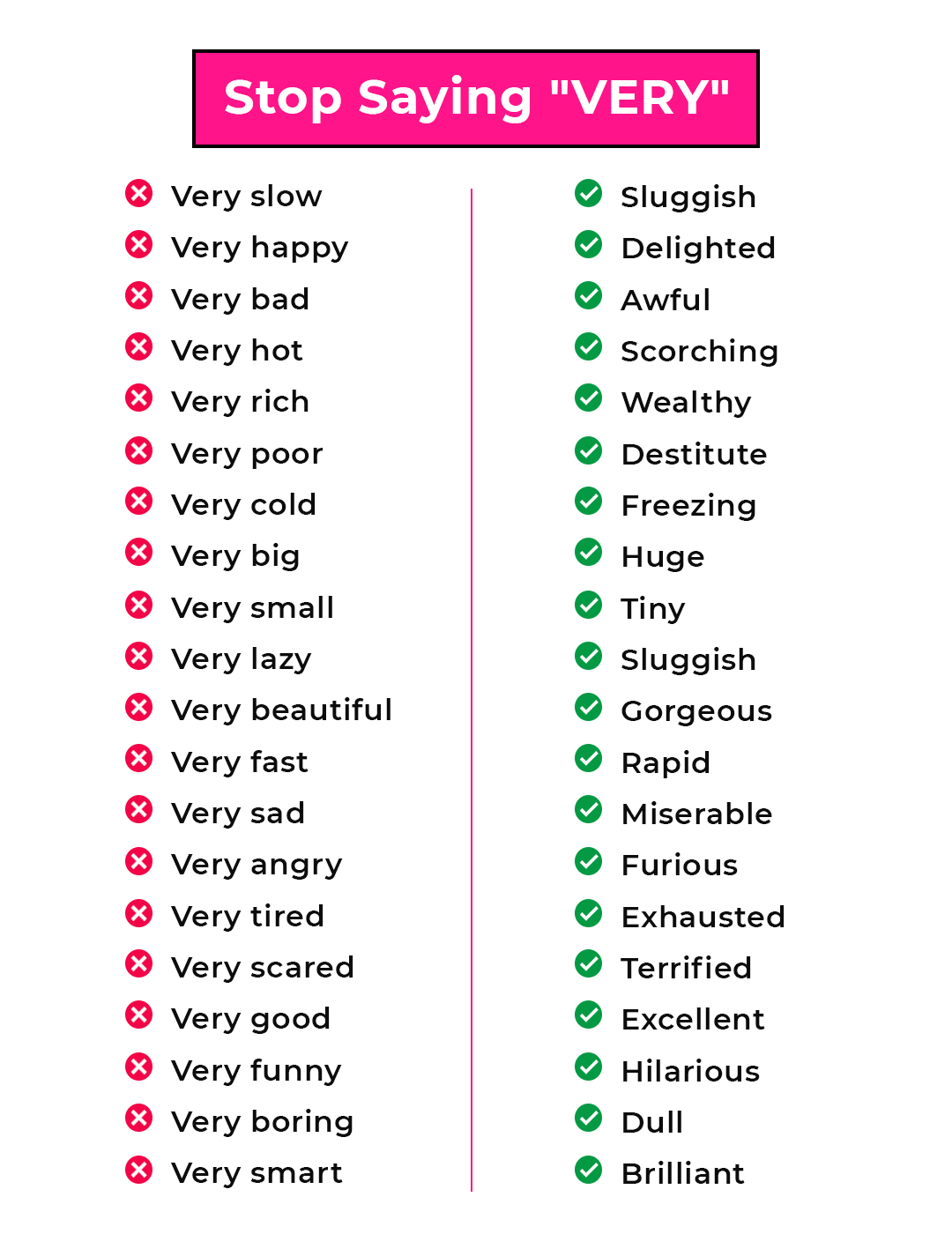
Learn - Stop Saying "VERY" . . #learnenglish #speakingpractice # ...
Eliminate Very From Your Vocabulary. Part 2 | PDF

Eliminate Very from your vocabulary. part 2 | PDF
Very Cute Coloring Pages

Very Cute Coloring Pages
Improve - Level Up Your English: Say Goodbye To ''Very’" #fblifestyle
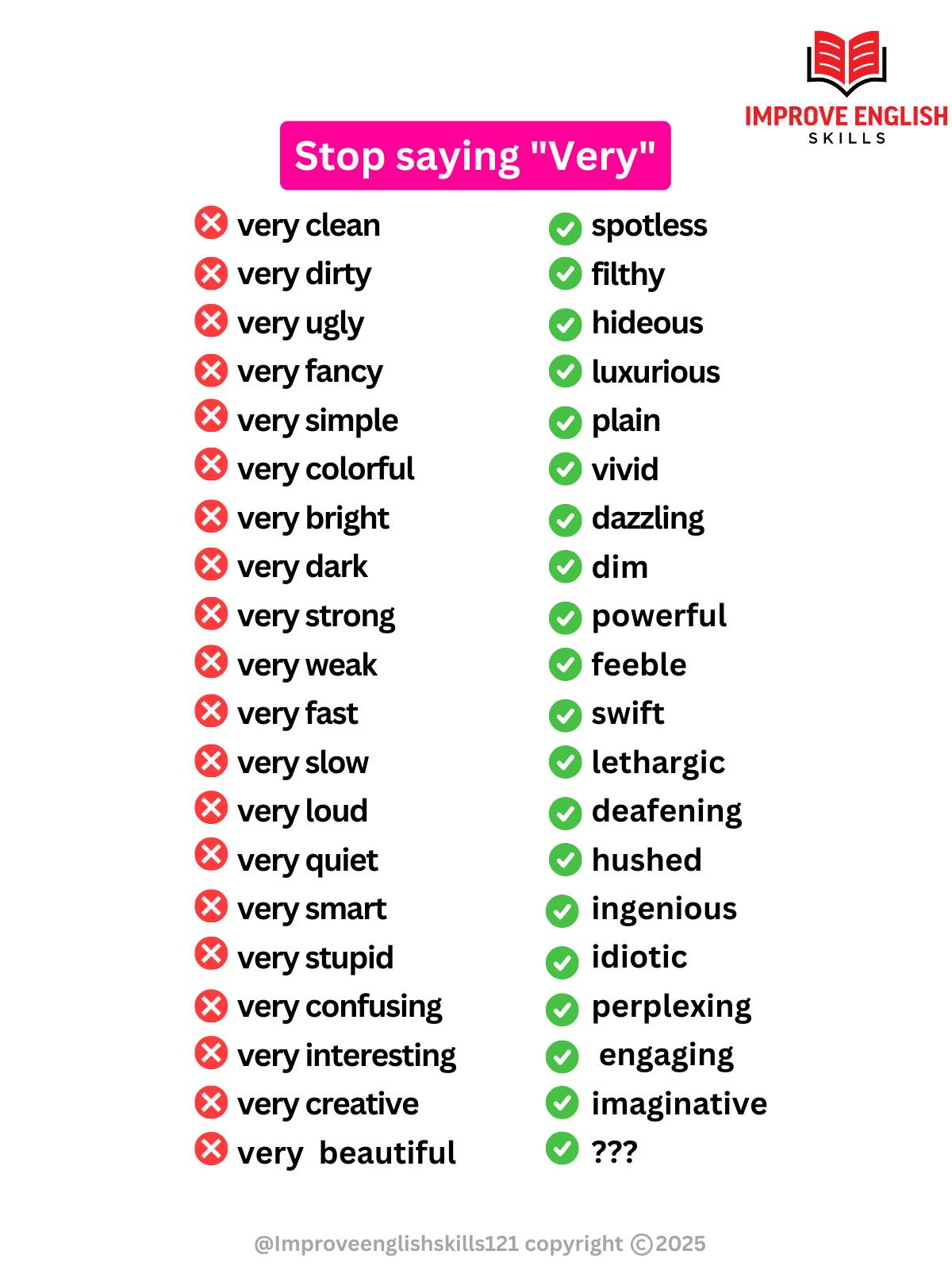
Improve - Level Up Your English: Say Goodbye to ''Very’" #fblifestyle ...